
Introduction
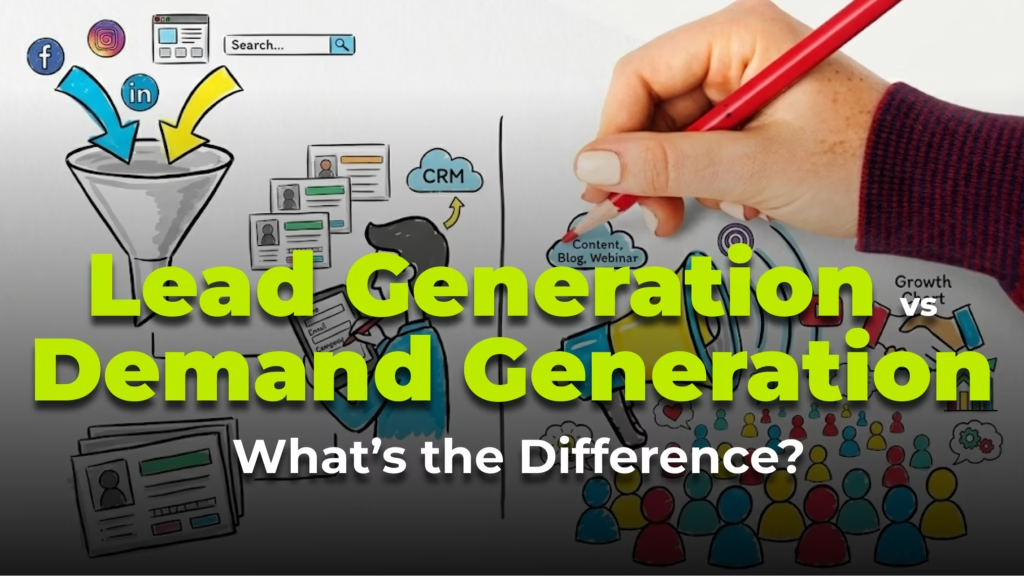
Most businesses confuse demand generation with lead generation.
They use the terms like they mean the same thing.
But in reality, they don’t.
And this confusion leads to poor marketing decisions—burned ad budgets, frustrated sales teams, and inconsistent pipeline.
The truth is:
Demand Generation creates interest.
Lead Generation captures that interest.
These are two different engines, but when they work together, you get a predictable, healthy, and scalable B2B pipeline.
This guide breaks it all down—what each one means, how they differ, why both matter, practical examples, and how they fit in the funnel stages.
What Is Demand Generation?
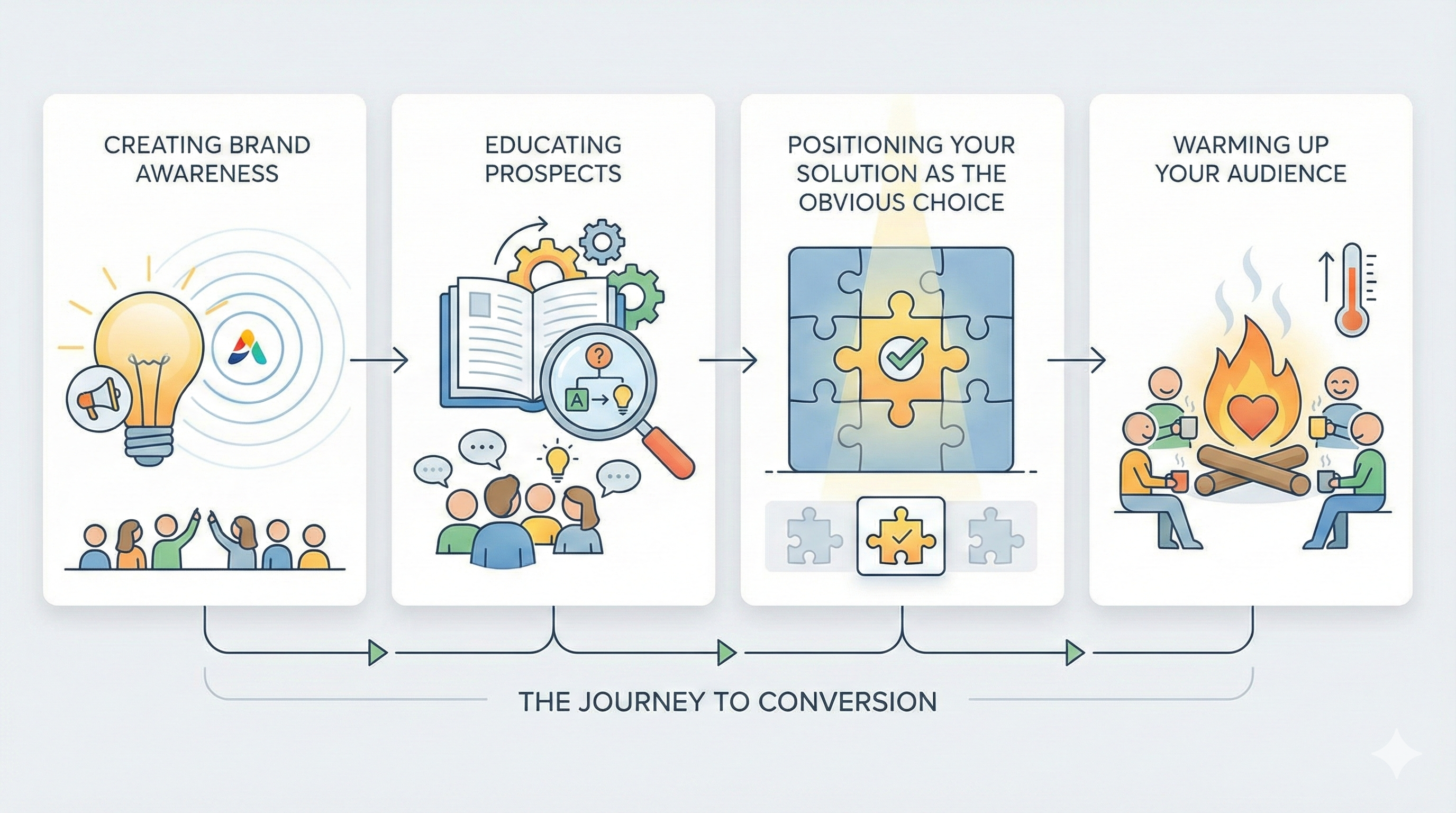
Demand Generation (Demand Gen) is the process of creating awareness, educating your audience, and generating interest in your product or service before they are ready to buy.
Think of demand generation as planting seeds.
It involves:
Demand generation does not focus on immediate conversions.
It focuses on long-term trust building.
Examples of Demand Generation
Here’s what demand generation looks like in action:
- Publishing blogs that solve industry problems
- Posting educational content on LinkedIn
- Sharing customer success stories
- Running awareness-stage video ads
- Hosting webinars
- Sharing podcasts/interviews
- Creating industry reports
- Running retargeting ads with value-led content
None of these activities ask the prospect to “book a demo”.
Instead, they help prospects discover you, trust you, and understand what you do.
Demand Gen = Building demand before capturing it.
What Is Lead Generation?
Lead Generation (Lead Gen) is the process of capturing the details of people who are interested and turning them into qualified leads.
Think of lead generation as harvesting the seeds you planted.
Lead generation focuses on:
- Converting website visitors
- Collecting contact details
- Running performance ads
- Booking demos
- Offering lead magnets
- Getting prospects into your pipeline
Lead Gen is more direct, conversion-focused, and sales-driven.
Examples of Lead Generation
Here’s what lead generation typically looks like:
- Running lead form ads
- Offering free trials
- Downloadable resources (templates, PDFs, checklists)
- Cold email outreach
- Appointment-setting campaigns
- Landing pages with CTAs
- Contact forms
- Paid search ads
In short:
Lead Gen = Capture interest and turn it into sales opportunities.
Demand Generation vs Lead Generation:
Here is the simplest explanation:
| Demand Generation | Lead Generation |
|---|---|
| Builds awareness & trust | Captures contact details |
| Educates the market | Turns interest into leads |
| Long-term strategy | Short-term conversions |
| No immediate CTA | Direct CTA (Demo, Call, Form) |
| Warm up prospects | Push prospects to next step |
| Works at top-of-funnel (TOFU) | Works at MOFU & BOFU |
| Measured by engagement | Measured by leads, CPL, SQL |
If demand generation tells your market why you matter,
lead generation tells them why they should talk to you now.
Why Both Matter in 2025
The modern B2B buyer journey has changed dramatically.
Buyers:
- Research silently
- Compare multiple options
- Read reviews
- Follow brands long before they buy
- Avoid salespeople until they’re ready
This means:
- If you only do lead generation, people will fill your forms—but they won’t convert.
- If you only do demand generation, people will know you—but you won’t get leads.
A high-performing B2B engine requires both.
How Demand Generation Works in the Funnel
Demand Gen is spread mostly across TOFU (Top of Funnel) and partly MOFU (Middle of Funnel).
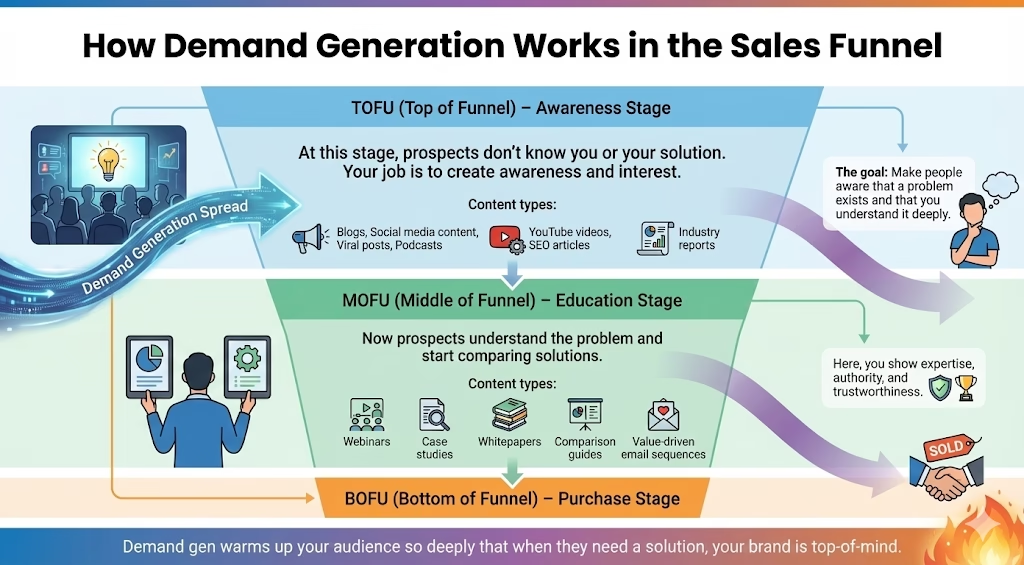
TOFU (Top of Funnel) – Awareness Stage
At this stage, prospects don’t know you or your solution.
Your job is to create awareness and interest.
Content types:
- Blogs
- Social media content
- Podcasts
- Viral posts
- Industry reports
- YouTube videos
- SEO articles
The goal:
Make people aware that a problem exists and that you understand it deeply.
MOFU (Middle of Funnel) – Education Stage
Now prospects understand the problem and start comparing solutions.
Content types:
- Webinars
- Case studies
- Whitepapers
- Comparison guides
- Value-driven email sequences
Here, you show expertise, authority, and trustworthiness.
Demand gen warms up your audience so deeply that when they need a solution, your brand is top-of-mind.
How Lead Generation Works in the Funnel
Lead Gen focuses on converting interest into action.
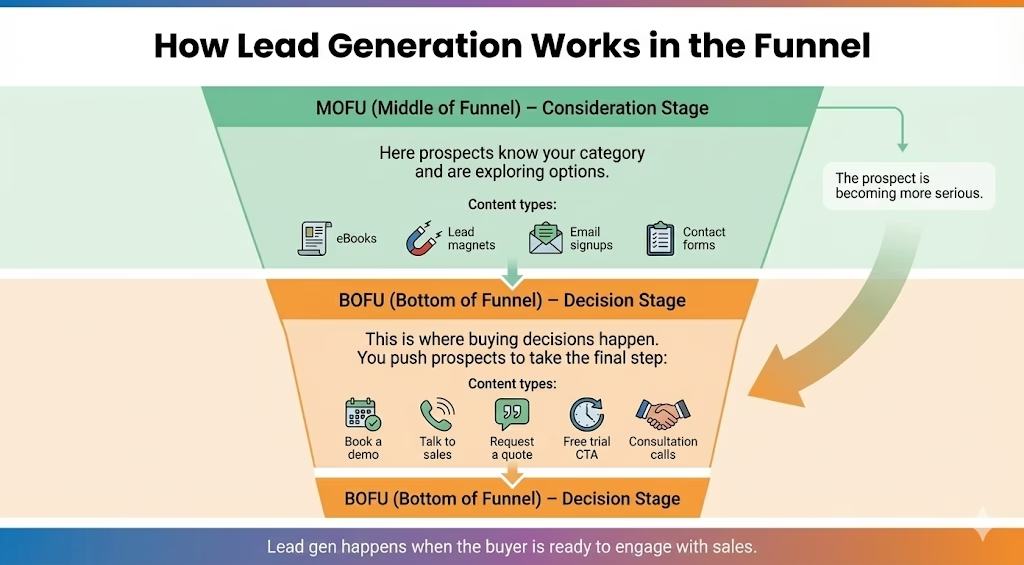
MOFU (Middle of Funnel) – Consideration Stage
Here prospects know your category and are exploring options.
Typical lead gen content:
- eBooks
- Lead magnets
- Email signups
- Contact forms
The prospect is becoming more serious.
BOFU (Bottom of Funnel) – Decision Stage
This is where buying decisions happen.
You push prospects to take the final step:
- Book a demo
- Talk to sales
- Request a quote
- Free trial CTA
- Consultation calls
Lead gen happens when the buyer is ready to engage with sales.
Simple Analogy: Demand Gen vs Lead Gen
Imagine you own a fruit store.
Demand Generation is like giving free fruit samples in the mall.
People taste, remember you, and feel familiar with the brand.
Lead Generation is inviting them into your shop and offering a discount if they buy today.
Both are necessary.
One builds trust.
One converts trust into revenue.
How Demand Gen and Lead Gen Work Together (Real Examples)
1. Example: LinkedIn Content → Webinar → Demo Call
- Demand Gen: You post daily insights on LinkedIn
- Demand Gen: Someone follows and engages
- Lead Gen: They sign up for a webinar
- Lead Gen: At the end of the webinar, they book a demo
2. Example: Google Search → Blog → Lead Magnet → Sales Call
- Demand Gen: A blog ranks on Google
- Demand Gen: A visitor reads it
- Lead Gen: They download a checklist
- Lead Gen: They reply to your follow-up email
- Sales-ready conversation begins
3. Example : Cold Outreach → Retargeting Ads → Demo
- Lead Gen: You send a cold email
- Demand Gen: They check your website
- Demand Gen: You retarget them with LinkedIn ads
- Lead Gen: They book a call after seeing credibility
Common Mistake: Focusing Only on Lead Generation
Many businesses run ads, collect leads, and then complain:
- “Leads are not converting.”
- “Nobody is responding.”
- “Our CPL is increasing.”
The root cause?
No demand generation.
Cold prospects don’t convert.
Warm prospects convert faster and cheaper.
Without demand gen, your lead gen becomes expensive and ineffective.
Common Mistake: Focusing Only on Demand Generation
On the flip side, some companies:
- Post on LinkedIn daily
- Publish blogs
- Run brand awareness ads
But still complain:
- “We are not getting leads.”
- “Traffic is coming but nobody is filling the form.”
- “Sales team has no pipeline.”
Why?
No capture mechanism.
You warmed the audience but didn’t give them a path to convert.
Demand gen without lead gen = Attention with no action.
Which One Should You Prioritize First?
If you are just starting out:
Short-Term: Lead Generation (to bring immediate results)
Example: Lead ads, cold outreach, landing pages.
Long-Term: Demand Generation (to build a predictable pipeline)
Example: Content, SEO, webinars, podcasts, community building.
The best companies balance both.
How to Combine Lead Gen + Demand Gen in 2025
Here is the simplest and most effective B2B strategy:
Step 1: Create helpful, educational content
Blogs, videos, LinkedIn posts, reports.
Step 2: Run awareness ads
Short videos, carousels, value-first content.
Step 3: Retarget your warm audience
Visitors → Viewers → Engaged audience.
Step 4: Offer lead magnets
Checklists, templates, calculators.
Step 5: Run conversion campaigns
Demo ads, trial offers, consultation forms.
Step 6: Nurture through email automation
Warm leads convert with time.
Step 7: Use retargeting to close the deal
BOFU ads + case studies.
This combination reduces CPL and boosts closing rates.
Conclusion
Demand generation and lead generation are not competitors.
They are partners.
Demand generation helps people know you, trust you, and remember you.
Lead generation gives them a clear path to talk to you, try you, and buy from you.
In 2025 and beyond, businesses that learn to balance both will win:
- Lower cost per lead
- Higher conversions
- Faster sales cycles
- Strong brand authority
- Predictable revenue
When demand gen warms the audience and lead gen captures the right moment, your pipeline becomes unstoppable.
