
Understanding Lead Qualification in Modern B2B Marketing
In our previous blogs, we discussed how lead generation works, and how inbound vs outbound strategies shape that journey in 2025. But generating leads is just the first half of the equation.
The real challenge begins after someone fills out a form, downloads a resource, schedules a demo, or replies to outreach.
At that point, every company faces the same question:
👉 “Is this lead actually worth pursuing — or will it waste time?”
This is where lead qualification comes in — separating casual interest from real buying intent.
In this guide, we’ll break down what makes a lead truly qualified, the difference between MQLs and SQLs, and how companies in 2025 decide when a prospect is ready for sales.
What Is a Qualified Lead?
A qualified lead is a potential customer who fits your target profile and shows real interest in your product or service — enough to justify nurturing or engaging them further.
A qualified lead meets two requirements:
- The right fit (industry, company size, budget, role, need)
- The right intent (interest, engagement, urgency, readiness)
If a prospect only fits one of these — they’re not yet qualified.
For example:
| Lead Type | Fit | Intent | Qualified? |
|---|---|---|---|
| A student downloading your B2B checklist | ❌ | ✔ | ❌ |
| A CEO visiting your pricing page and scheduling a demo | ✔ | ✔ | ✔ |
| A relevant decision-maker who never engages | ✔ | ❌ | ❌ |
A lead is qualified only when both conditions align.
Why Lead Qualification Matters in 2025
The buyer journey has changed.
Today’s prospects:
- Do most research before talking to sales
- Compare options silently
- Delay conversations until they trust a brand
- Prefer personalized engagement
That means your CRM may fill up with leads — but not all of them are ready or relevant.
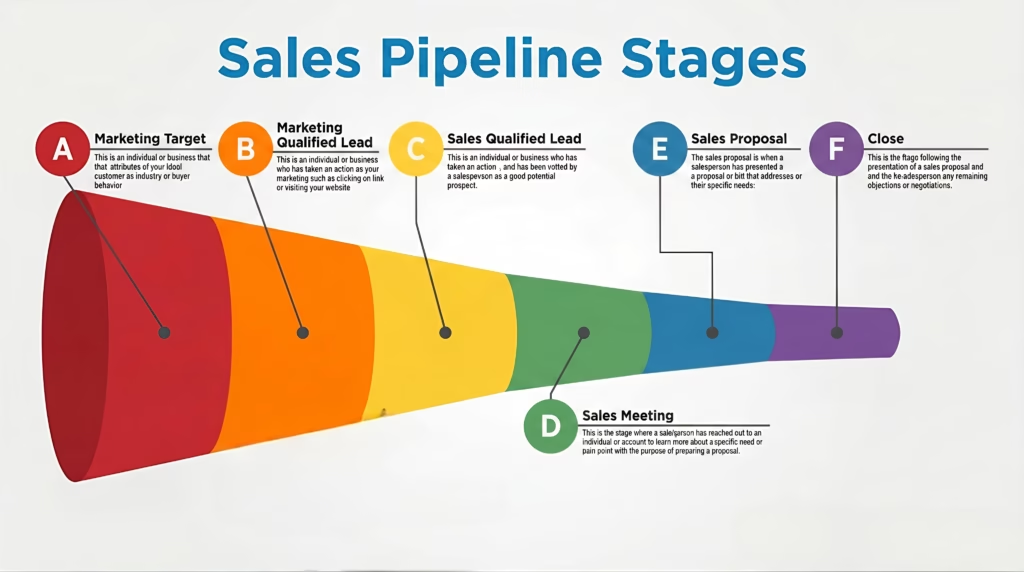
Without proper qualification:
❌ Sales pipelines become chaotic
❌ Sales reps waste time on poor leads
❌ CPL (Cost Per Lead) looks good but CAC (Customer Acquisition Cost) increases
❌ Conversion rates drop
❌ Growth becomes unpredictable
With proper qualification:
✅ Sales teams focus on high-probability deals
✅ Marketing efforts feel aligned
✅ Follow-ups become meaningful
✅ Conversions and revenue increase
Lead qualification isn’t just a filter — it’s efficiency.
Two Main Lead Qualification Types: MQL vs SQL
To make qualification structured, most companies use two important lead categories:
- MQL — Marketing Qualified Lead
- SQL — Sales Qualified Lead
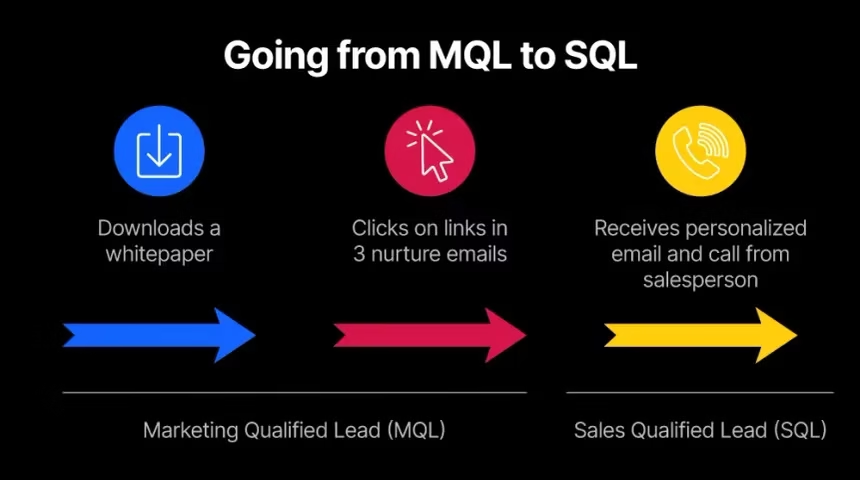
Let’s break these down.
What Is an MQL? (Marketing Qualified Lead)
An MQL is a lead that shows interest or engagement with your brand — but is not yet ready to talk to sales.
They are aware of their problem and exploring solutions, but still in research or comparison mode.
Examples of MQL Behavior
A lead may become an MQL if they:
- Download a resource (ebook, template, guide)
- Subscribe to your newsletter
- Attend a webinar
- Read multiple blog posts
- Visit your pricing or features pages
- Follow your LinkedIn content consistently
These actions suggest curiosity — but not commitment.
MQL Funnel Stage
MQLs live in the Middle of the Funnel (MOFU) — right after awareness, before decision making.
Goal with an MQL
The objective is NOT to sell.
The goal is to:
👉 Educate
👉 Nurture
👉 Build trust
👉 Provide value
Because if they are nurtured well enough, they will move forward to the next phase: SQL.
What Is an SQL? (Sales Qualified Lead)
An SQL is a lead who is ready to talk with the sales team.
They:
- Know their problem
- Understand available solutions
- Show clear buying intent
- Meet qualification criteria
Examples of SQL Behavior
A lead becomes SQL when they:
- Request a demo
- Ask for pricing
- Respond positively to outreach
- Book a meeting
- Request a proposal
- Ask technical or implementation questions
These actions show readiness — not research.
SQL Funnel Stage
SQLs live in the Bottom of the Funnel (BOFU) — where deal conversations begin.
Goal with an SQL
The goal is:
👉 Qualification → Presentation → Proposal → Close
Sales involvement begins here.
Key Differences: MQL vs SQL (Quick Table)
| Factor | MQL | SQL |
|---|---|---|
| Intent Level | Medium | High |
| Readiness to Buy | Not yet | Yes |
| Who Handles? | Marketing team | Sales team |
| Funnel Stage | Middle (MOFU) | Bottom (BOFU) |
| Common Actions | Learn, download, engage | Book demo, ask pricing |
How Leads Move from MQL → SQL
Not every MQL becomes an SQL — and that’s normal.
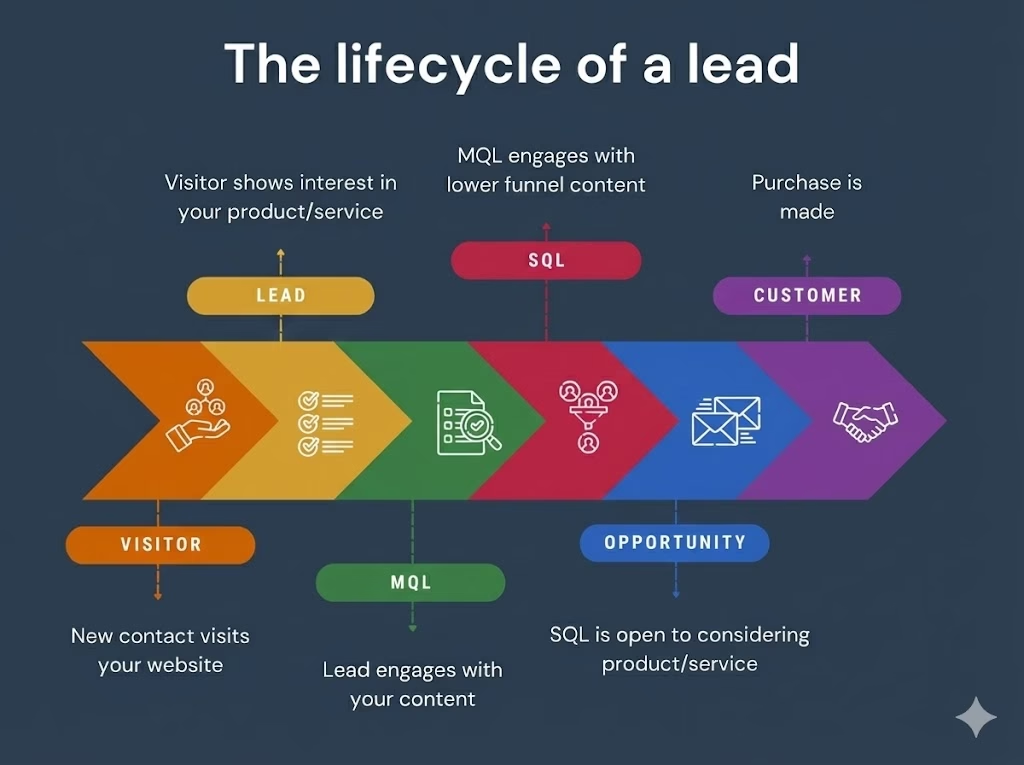
The transition happens when:
1. Fit + Intent Align
ICP match + strong signals = SQL.
2. Lead Scoring Threshold Crossed
Lead scoring assigns points based on:
- Website activity
- Engagement
- Job title
- Company size
- Interaction history
- Response actions
Example scoring model:
| Action | Points |
|---|---|
| Downloaded ebook | +10 |
| Watched webinar | +20 |
| Visited pricing page | +30 |
| Booked demo | +100 |
When the score crosses a threshold (e.g., 70 points), the lead becomes SQL.
Where This Fits in the Full Funnel
From our earlier blog on Inbound vs Outbound Lead Generation, we saw that prospect journeys vary depending on how leads enter the funnel.
Here’s how qualification fits into that journey:
- Inbound:
Leads from SEO, blogs, social content first become MQLs → later turn SQL after nurturing. - Outbound:
Leads from cold outreach may skip MQL stage if they show immediate buying intent — but most require warming before becoming SQL.
No matter the path — qualification improves predictability.
Examples: Turning Leads Into Qualified Leads
Example 1 — Content Download (Inbound MQL → SQL)
- Prospect reads blog
- Downloads resource
- Receives nurturing emails
- Clicks pricing
- Books demo
✔ Final status: SQL
Example 2 — Cold Outreach (Outbound → Immediate SQL)
- SDR emails ICP CEO
- CEO replies “We’re looking for a vendor, let’s talk.”
✔ Final status: Immediate SQL
Example 3 — Social Engagement (Slow MQL → SQL)
- Prospect follows LinkedIn posts
- Attends webinar
- Replies to newsletter
- Schedules consultation
✔ Final status: SQL
Common Lead Qualification Frameworks
To avoid guesswork, many companies use qualification models like:
- BANT (Budget, Authority, Need, Timing)
- CHAMP (Challenges, Authority, Money, Prioritization)
- MEDDIC (Metrics, Authority, Pain, Champion, Competition)
No model is perfect — but each brings structure.
Best Practices for Lead Qualification in 2025
To qualify leads effectively:
✔ Align marketing & sales definitions
✔ Use consistent scoring rules
✔ Review scoring and adjust quarterly
✔ Track funnel performance
✔ Personalize follow-ups based on lead stage
✔ Use automation, but NEVER lose the human element
Qualification is not a single action — it’s a process.
Conclusion
A lead becomes qualified when two criteria meet:
👉 They fit your ideal customer profile.
👉 They show real buying intent.
MQL and SQL aren’t just labels — they guide messaging, timing, and ownership between marketing and sales.
In 2025, the companies winning at B2B lead generation aren’t just generating leads — they’re qualifying them properly, nurturing intelligently, and handing sales only the right opportunities.
And that’s the difference between a full CRM and a predictable revenue engine.
