
Understanding Why Lead Scoring Matters
Every business that generates leads — whether through inbound content like blogs, webinars, and SEO (as we discussed in Inbound vs Outbound Lead Generation) or through outbound outreach — faces one big question of Lead scoring:
👉 Which leads are worth following up with first?
Not all leads are equally valuable. Some are just curious. Others are ready to buy. Lead scoring helps you tell the difference.
In simple terms, lead scoring is a way to assign a score or value to every lead based on how likely they are to become a customer.
In this guide, we’ll break it down for beginners, including what it is, why it matters, how it works, scoring models, practical examples, and steps to implement your own system in 2025.
What Is Lead Scoring? (Simple Definition)
Lead scoring is a systematic method of ranking prospects using a numeric score — usually on a scale — to show how ready and fit they are to buy.
This score helps your marketing and sales teams prioritize:
- Who should be nurtured further
- Who is ready for a sales conversation
- Who should receive specific messages or offers
Instead of guessing or treating every lead the same, scoring lets you focus your time on the leads most likely to convert.
Think of it as sorting your inbox by priority — except the inbox is your entire lead database.
Why Lead Scoring Matters in 2025
In our earlier blogs like What Is a Qualified Lead?, we discussed how leads move between stages — from marketing qualified to sales qualified. Lead scoring sits right at the heart of that process.
Here’s why it’s so crucial now:
1. Buyers Are More Informed
Modern B2B buyers research extensively before engaging with sales. A simple form fill doesn’t guarantee interest or readiness. Lead score helps determine who really wants your solution.
2. Sales & Marketing Alignment
Without lead score, marketing may pass unready leads to sales, leading to frustration and inefficiency. A scoring system provides a shared language of what a good lead looks like.
3. Better Prioritization
Sales teams can prioritize high-value leads instead of chasing every new submission. This improves conversion rates and shortens sales cycles.
4. Efficient Resource Use
Time is limited. Lead scoring ensures your team’s attention gets spent where it matters most — on leads that are both interested and a good fit.
How Lead Scoring Works — Step-by-Step
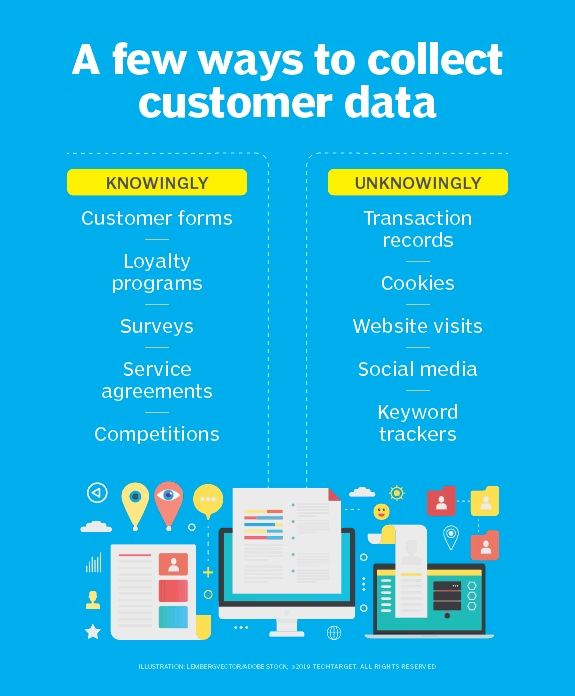
Lead scoring assigns point values based on two main types of attributes:
1. Explicit Attributes
These are data points you already know about a lead, such as:
- Job title
- Company size
- Industry
- Geography
- Budget
- Role in purchase decision
These help measure fit.
2. Implicit Attributes
These are behavioral signals that show engagement or intent, such as:
- Website page views
- Content downloads
- Email opens & clicks
- Webinar attendance
- Demo requests
These help measure interest.
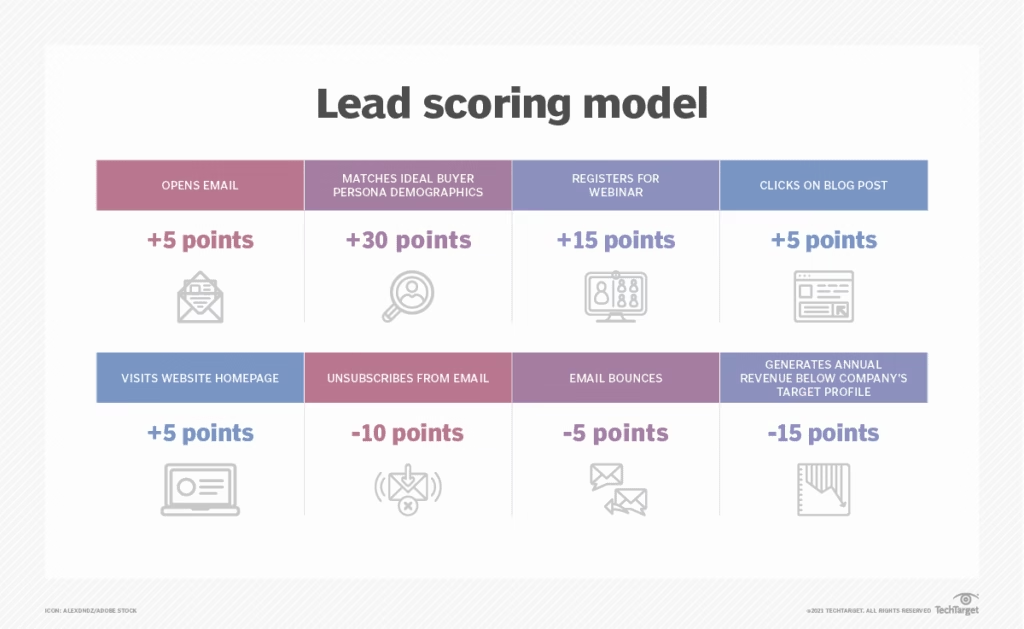
Lead scores combines fit and interest to calculate a total score — the higher the score, the more sales-ready the lead.
Example: Simple Lead Scoring Table
| Action / Attribute | Points |
|---|---|
| Visiting pricing page | +30 |
| Downloading an ebook | +20 |
| Attending webinar | +40 |
| Job title = Decision-maker | +25 |
| Email open | +5 |
| Email unsubscribe | −10 |
Once a lead crosses a certain threshold (e.g., 70 points), they can be handed to sales as an SQL (Sales Qualified Lead). This aligns with the MQL → SQL transition we explained earlier.
Lead Scoring Models You Should Know
There isn’t one universal way to score leads — the best model depends on your business and buyers. Still, here are the commonly used approaches:
1. Demographic / Firmographic Scoring
Assigns points based on lead’s company and personal attributes.
Good for identifying fit.
2. Behavioral Scoring
Focuses on what leads do — page views, downloads, engagement.
Good for identifying interest.
3. Engagement Scoring
Gives weight to how leads interact with your emails, ads, or content over time.
4. Predictive Lead Score
Uses AI or machine learning to forecast lead value using historical patterns.
Predictive scores are advanced but highly effective for larger B2B sales teams.
5. Combined Scoring
Mixes demographic and behavioral signals — often the most balanced model.
Where Lead Scoring Fits in the Funnel
We’ve previously discussed funnel stages in blogs like Lead Generation vs Demand Generation and Inbound vs Outbound Lead Generation.
Here’s how lead scoring supports them:
Top of Funnel (TOFU)
Your inbound content attracts broad interest. Lead score starts with low scores here.
Middle of Funnel (MOFU)
Leads engage more — downloading guides, reading pricing, attending webinars. Scores increase.
Bottom of Funnel (BOFU)
High-score leads show buying behavior and become SQLs ready for sales.
This strategic flow ensures you only pass the right leads to sales, maximizing revenue potential.
Benefits of Lead Scoring (Why It Matters)
1. Sales Prioritization
Sales teams know exactly who to contact first — saving time and effort.
2. Better Marketing ROI
Marketing learns which channels and behaviors produce the best quality leads.
3. Faster Sales Cycles
Qualified leads move faster through the pipeline because they’re better prepared.
4. Higher Conversion Rates
By focusing on high-score leads, conversions improve.
5. Sales & Marketing Alignment
A lead score system creates shared understanding and smooth handoffs.
Practical Tips to Build Your Lead Scoring System
1. Define Your Ideal Customer Profile (ICP)
Know which attributes make a lead valuable before score. Alignment here improves accuracy.
2. Choose Scoring Criteria
Select explicit and implicit attributes that matter most for your business.
3. Set Your Scoring Thresholds
Decide the minimum score required for MQL and SQL thresholds.
4. Use Technology
Most CRMs (like HubSpot, Salesforce) allow automated scoring.
5. Review Regularly
Lead behavior and buying patterns change — update your model regularly.
Common Scoring Mistakes to Avoid
❌ Scoring Every Lead the Same
Not all behaviors are equal — weigh them based on impact.
❌ Ignoring Negative Scoring
Negative behavior (e.g., unsubscribes) should lower scores too. – Wikipedia
❌ Not Aligning with Sales
Without clear definitions, marketing and sales won’t trust the scores.
In 2025, lead scoring isn’t optional — it’s a strategic advantage.
It turns raw lead volume into meaningful opportunities.
Aligns sales and marketing teams.
It prioritizes effort where it matters most.
And it transforms your lead funnel into a revenue-predictable engine.
Whether your leads come from inbound blogs, SEO, webinars, outbound outreach, or paid campaigns — lead score ensures that the right leads get the right attention at the right time.
That’s the power of scoring leads effectively.
