
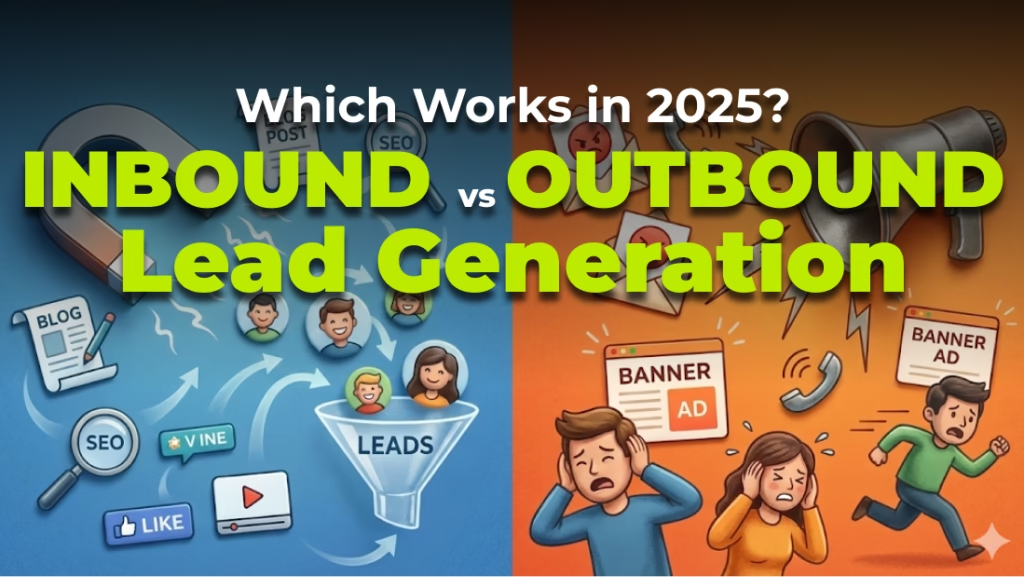
Understanding Inbound vs Outbound Lead Generation in 2025
B2B lead generation isn’t what it used to be. Inbound vs Outbound Lead Generation
Five years ago, outbound dominated.
Cold emails, cold calls, events, trade shows—everything was about pushing messages out.
Today, the landscape looks completely different.
Buyers are more informed.
Competition is higher.
Attention is shorter.
And decision-makers hate being interrupted.
But does that mean outbound is dead?
Not at all.
In 2025, inbound and outbound both work—but not the way they used to. They work together.
This blog breaks down everything:
What inbound and outbound mean, how they differ, their pros and cons, funnel stages, examples, and most importantly—which approach wins in 2025.
Let’s start from the basics.
What Is Inbound Lead Generation?
Inbound lead generation means attracting prospects who come to you on their own.
They discover your brand, consume your content, trust you, and eventually convert.
Inbound is built on one principle:
Provide value first, sell later.
Inbound Lead Generation Examples
Channels include:
- Blogs that answer buyer questions
- SEO that brings organic traffic
- LinkedIn content
- YouTube tutorials
- Webinars
- Guides, templates, checklists
- Case studies
- Email newsletters
- Social media content
- Lead magnets
- Organic community building
Inbound is slow at the beginning but powerful in the long run.
It’s like planting seeds that keep growing every month, even while you sleep.
What Is Outbound Lead Generation?
Outbound lead generation means reaching out to prospects before they know you.
Instead of waiting for them to come, you initiate the first touch.
Outbound is built on:
Identify → Target → Reach Out.
Outbound Lead Generation Examples
Channels include:
- Cold email campaigns
- Cold calling
- LinkedIn direct outreach
- Industry events
- Paid ads targeting specific companies
- WhatsApp business outreach
- Appointment-setting funnels
- Third-party prospecting lists
Outbound is fast, predictable, and direct.
When done well, outbound brings opportunities quickly—especially for B2B.
Inbound vs Outbound: Key Differences
Here’s the simplest comparison:
| Inbound Lead Generation | Outbound Lead Generation |
|---|---|
| Prospects come to you | You reach out to prospects |
| Runs on trust & value | Runs on targeting & volume |
| Cheaper long-term | Faster short-term |
| SEO, content, social | Emails, calls, ads |
| Builds brand authority | Fills pipeline quickly |
| Organic & sustainable | Consistent but requires effort |
| Buyers are warmer | Buyers are colder |
Inbound is slow but powerful.
Outbound is fast but competitive.
Both play different roles—but you need both.
Why Inbound Matters More in 2025
Let’s talk about buyer behavior.
In 2025:
- Buyers do 70–80% of research before contacting any company.
- They Google everything.
- They follow brands they like.
- They compare solutions silently.
- They consume content before engaging.
This means:
If you’re not visible online…
If you are not publishing helpful content…
If you’re not educating your industry…
If you are not active on LinkedIn…
You’re invisible.
Inbound builds:
- Trust
- Awareness
- Authority
- Demand
- Thought leadership
It makes your brand familiar, which reduces the friction in outbound later.
Why Outbound Still Works in 2025
Despite all the noise, outbound is still extremely effective.
Here’s why:
- Not all prospects will discover you organically
- Businesses can’t afford to wait months for inbound
- Outbound provides predictable pipeline
- You can reach exact decision-makers anytime
- It’s scalable with systems and automation
- ICP targeting is sharper than ever
Outbound shines especially in:
- Enterprise sales
- Mid-market B2B
- Appointment-setting
- Lead generation companies
- Vertical-specific solutions
- SaaS and tech
When done with personalization and smart targeting, outbound gets results fast.
Inbound Funnel vs Outbound Funnel
Both strategies follow different funnel paths.
Inbound Funnel (Attract → Engage → Convert)
1. Attract
SEO, blogs, social content, videos.
Goal: bring them into your world.
2. Engage
Lead magnets, email sequences, webinars.
Goal: warm them up.
3. Convert
Demos, calls, trials, consultations.
Goal: turn them into revenue.
Inbound is a slow burn but leads are warmer and cheaper.
Outbound Funnel (Identify → Target → Reach Out)
1. Identify
Find ICP companies & decision-makers.
2. Target
Segment based on need, industry, revenue.
3. Reach Out
Cold emails, calls, LinkedIn messages.
4. Follow-Up
Nurture until they’re ready.
Outbound is a fast engine but needs persistence and systems.
Pros & Cons of Inbound Lead Generation
Pros
- Evergreen traffic from SEO
- Builds brand authority
- Higher-quality, warmer leads
- Lower long-term cost
- Builds trust before selling
- Excellent for TOFU (top of funnel)
- Creates demand that outbound can capture later
Cons
- Takes time to grow
- Needs ongoing content creation
- Results compound slowly
- Harder to start if you have zero audience
- Needs strong strategy, not random posting
Inbound is powerful, but not instant.
Pros & Cons of Outbound Lead Generation
Pros
- Immediate pipeline
- Easy to scale with tools
- Works even if you have no brand visibility
- Direct access to exact buyers
- Predictable and controlled
Cons
- Reply rates are falling
- Buyers ignore generic messages
- Needs personalization to work
- Can be expensive with low-quality data
- Risk of domain damage if not done properly
Outbound works—but only with precision.
How to Combine Inbound + Outbound in 2025 (Winning Strategy)
Here’s a proven framework that top B2B brands use:
Step 1: Build Inbound Foundation
- Publish 3–5 SEO blogs a month
- Create high-value content on LinkedIn
- Create lead magnets
- Build an email newsletter
- Add strong CTAs on your website
This builds your audience.
Step 2: Warm Up the Audience
Content types that warm up inbound prospects:
- Tutorials
- Comparison guides
- Problem-solving posts
- Industry insights
- Webinars
- Value-driven reports
This makes your brand familiar.
Step 3: Launch Personalized Outbound Campaigns
Reach out to:
- ICP companies
- Verified decision-makers
- People who visited your website
- People who engaged with your LinkedIn content
- People who downloaded a lead magnet
Warm outbound works 3x better than cold outbound.
Step 4: Use Automation Smartly
Tools for efficiency:


Automation saves time but personalization drives replies.
Step 5: Retarget Constantly
Retargeting ads convert people who:
- Visited your site
- Opened your emails
- Watched your videos
- Engaged with your content
Retargeting = BOFU gold mine.
Step 6: Nurture Continuously
Use:
- Email drip workflows
- Case studies
- Cheat sheets
- Product tours
- Testimonials
Nurturing turns “curious prospects” into “ready buyers”.
Practical Example: How This Works
Let’s walk through a real inbound + outbound flow:
Step 1 — Inbound:
A CEO reads your blog about “B2B lead generation tips”.
Step 2 — Inbound:
They start following you on LinkedIn.
Step 3 — Inbound:
They download your free checklist.
Step 4 — Outbound:
Your SDR reaches out with a personalized email.
Step 5 — Outbound:
They reply and book a call.
Step 6 — Nurture:
You send them case studies.
Step 7 — Conversion:
They sign up for your service.
Here, inbound created trust.
Outbound converted it.
When Should You Focus More on Inbound?
Inbound is best when:
- You want long-term predictable growth
- You want cheaper leads
- You want high-quality conversations
- You want to build a strong brand
- You want organic authority in your industry
Ideal for: SaaS, agencies, consulting, B2B platforms, niche services.
When Should You Focus More on Outbound?
Outbound is best when:
- You want fast results
- You’re targeting specific industries
- You have a small niche audience
- You’re starting fresh with no brand presence
- You want high-ticket deals
Ideal for: enterprise solutions, B2B services, appointment setting, manufacturing, IT services, and specialized consulting.
Conclusion: What Works in 2025?
In 2025, the most successful companies don’t ask:
“Inbound or outbound?”
They ask:
“How do we combine both?”
Inbound builds trust.
Outbound creates opportunities.
Inbound warms up your market.
Outbound captures the demand.
Inbound gives you authority.
Outbound gives you pipeline.
Together, they give you:
- Higher conversions
- Faster sales cycles
- Cheaper lead costs
- Strong brand recall
- More predictable revenue
The companies who master both will dominate 2025 and beyond.
