
Why SaaS Lead Generation Is Different
B2B lead generation strategies for SaaS companies works very differently from traditional service businesses or ecommerce brands.
SaaS buyers don’t wake up and book a demo impulsively.
They research it first.
Then compare the tools.
Then they read blogs, watch videos, ask peers, and shortlist options long before speaking to sales.
In many cases, multiple stakeholders are involved, and the buying cycle stretches across weeks or even months.
That’s why many SaaS companies feel stuck.
Traffic is coming in. Leads are being generated. But conversions don’t match expectations.
The issue is rarely effort.
The issue is strategy.
In earlier blogs, we discussed how inbound vs outbound lead generation, MQL vs SQL, and lead scoring shape the buyer journey. This blog builds on that foundation and focuses specifically on what actually works for SaaS companies in 2026.
1. Content-Led Inbound Marketing That Educates Before It Sells
Inbound marketing remains one of the most effective B2B lead generation strategies for SaaS companies — but only when done correctly.
SaaS buyers are problem-aware long before they are product-aware. They search for solutions, frameworks, comparisons, and best practices before they ever look for a specific tool. Content helps you enter that conversation early.
Instead of writing product-heavy blogs, high-performing SaaS companies focus on problem-first content. They explain challenges, industry trends, mistakes, and better ways of doing things. Over time, this builds trust and authority.
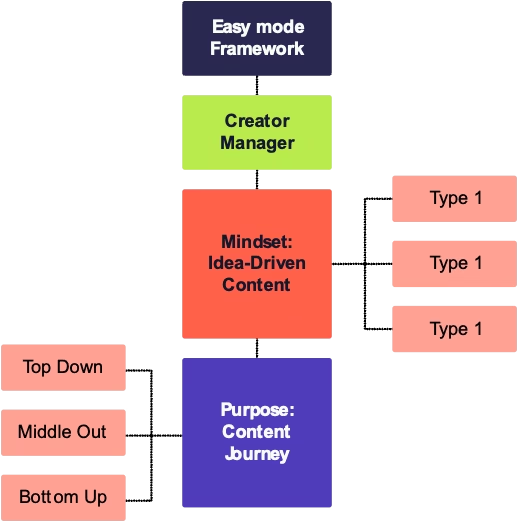
When inbound content is done right, it naturally produces Marketing Qualified Leads (MQLs) — readers who understand the problem and see your brand as credible, even if they’re not ready to buy yet.
2. SEO as a Long-Term B2B Lead Generation Engine
SEO is one of the most sustainable lead generation strategies for SaaS companies, but it’s often misunderstood.
SaaS SEO isn’t about ranking for generic keywords. It’s about capturing intent at different stages of the funnel. That includes:
- Problem-aware searches
- Solution-aware searches
- Comparison searches
- “Alternatives” searches
- Integration and use-case searches
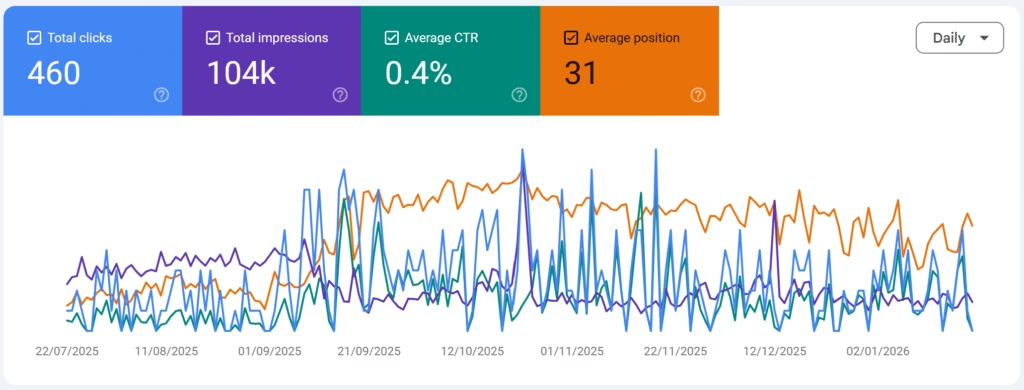
When SaaS companies align their SEO content with buyer intent, the traffic they attract is far more qualified. These visitors arrive with context, questions, and genuine interest.
Over time, SEO reduces dependency on paid ads, lowers cost per lead, and feeds inbound demand consistently — making it a foundational pillar in most successful SaaS growth engines.
3. High-Intent Lead Magnets That Qualify, Not Just Capture
Lead magnets still work — but only when they’re specific.
Generic ebooks and broad whitepapers rarely qualify SaaS leads anymore. Modern buyers want quick, practical value. The best SaaS lead magnets solve one focused problem and naturally connect to the product.
Examples include calculators, templates, checklists, audits, or short playbooks. These resources don’t just capture emails; they signal intent.
When paired with lead scoring, these magnets help identify which users are exploring casually and which are moving closer to a buying decision.
4. Product-Led Growth (PLG) Through Free Trials and Freemium Models
Many SaaS companies generate their highest-quality leads inside the product itself.
Free trials and freemium models allow prospects to experience value before committing to a sales conversation. This lowers resistance and builds confidence organically.
However, PLG works best when combined with structure. SaaS teams that succeed here monitor product usage, onboarding behavior, and feature engagement. These signals are far stronger than form fills alone.
This is where behavior-based lead scoring becomes critical — helping sales teams engage only when usage shows real intent.
5. Outbound Lead Generation That Feels Relevant, Not Random
Outbound lead generation still works in 2026 — but not in its old form.
Generic cold emails and mass outreach fail because SaaS buyers expect relevance. Effective outbound today is targeted, personalized, and often triggered by prior engagement.
Strong SaaS outbound campaigns are built around:
- Clear ICP definitions
- Personalization based on role or pain point
- Timing aligned with inbound signals
When outbound follows inbound exposure — such as content views or site visits — response rates improve dramatically. This reinforces the idea we discussed earlier: inbound warms the market, outbound accelerates conversions.
6. LinkedIn as a Demand Generation Platform for SaaS
For B2B SaaS companies, LinkedIn is not just a social platform — it’s a demand generation channel.
Consistent, insight-driven content helps SaaS brands stay visible during long buying cycles. Buyers may not convert immediately, but repeated exposure builds familiarity and trust.
Over time, this demand generation effect:
- Improves outbound response rates
- Shortens sales cycles
- Makes demo conversations warmer
LinkedIn content works best when it focuses on lessons, insights, and industry experiences rather than direct promotion.
7. Webinars and Live Sessions for Mid-Funnel Lead Generation
Webinars continue to be one of the highest-intent channels for SaaS lead generation.
Unlike passive content, webinars require time commitment. That alone signals higher engagement. When webinars are educational rather than sales-heavy, they attract serious prospects who are actively evaluating solutions.
Webinar attendees often move faster from MQL to SQL, especially when follow-ups are personalized and aligned with the topic discussed.
8. Retargeting and Nurture Campaigns That Respect the Buyer Journey
Most SaaS leads don’t convert on their first interaction.
Retargeting allows SaaS companies to stay present while prospects continue their research. When paired with thoughtful email nurturing, it helps address doubts, reinforce value, and build confidence.
Retargeting works best when messaging changes based on stage — educational early on, proof-driven later, and conversion-focused at the bottom of the funnel.
9. Partner-Led and Integration-Based Lead Generation
Partnerships are often overlooked, yet extremely powerful for SaaS lead generation.
Integrations, co-marketing campaigns, and partner webinars introduce your product to an already relevant audience. Because trust already exists, leads from partners often convert faster and with less resistance.
This strategy works particularly well for SaaS products that complement existing tools or workflows.
10. Lead Qualification and Scoring to Protect Sales Time
Generating leads is meaningless without qualification.
The most successful SaaS companies focus less on volume and more on lead readiness. They score leads based on fit, behavior, and intent — ensuring sales teams engage at the right moment.
As discussed in our earlier Lead Scoring and MQL vs SQL blogs, this alignment between marketing and sales is what turns lead generation into predictable revenue.
How These Strategies Work Together
High-performing SaaS companies don’t rely on one channel.
They combine:
- Inbound content and SEO to build awareness
- Lead magnets and webinars to capture intent
- Retargeting and nurturing to guide decisions
- Outbound to accelerate high-intent opportunities
- Lead scoring to prioritize conversations
This system approach is what makes B2B lead generation sustainable for SaaS.
Conclusion:
There is no single best B2B lead generation strategies for SaaS companies.
What works in 2026 is alignment — between content, outreach, qualification, and buyer behavior. SaaS companies that respect how buyers research, evaluate, and decide will always outperform those chasing shortcuts.
When lead generation is treated as a system – not a tactic – growth becomes predictable, scalable, and far less stressful.
